12.5.13

Workshop on Adaptive Management of Kelp Forests

Last week, the Laboratory of Spatial Ecology organized, together with CIIMAR, a Workshop on the Adaptive Managament of Kelp Forests, in Porto (Portugal).

Pablo F. Méndez and L. Santamaría facilitated the workshop, which was part of the Marine Biodiversity case study of the BiodiversityKnowledge Project - a project aimed at facilitating the flow of knowledge between biodiversity experts and users in Europe.

During the workshop, the participants used techniques of group model building to develop recommendations for the managment of European kelp forests.

Keep an eye on this blog for the policy brief and other products generated in the workshop.

3.5.13

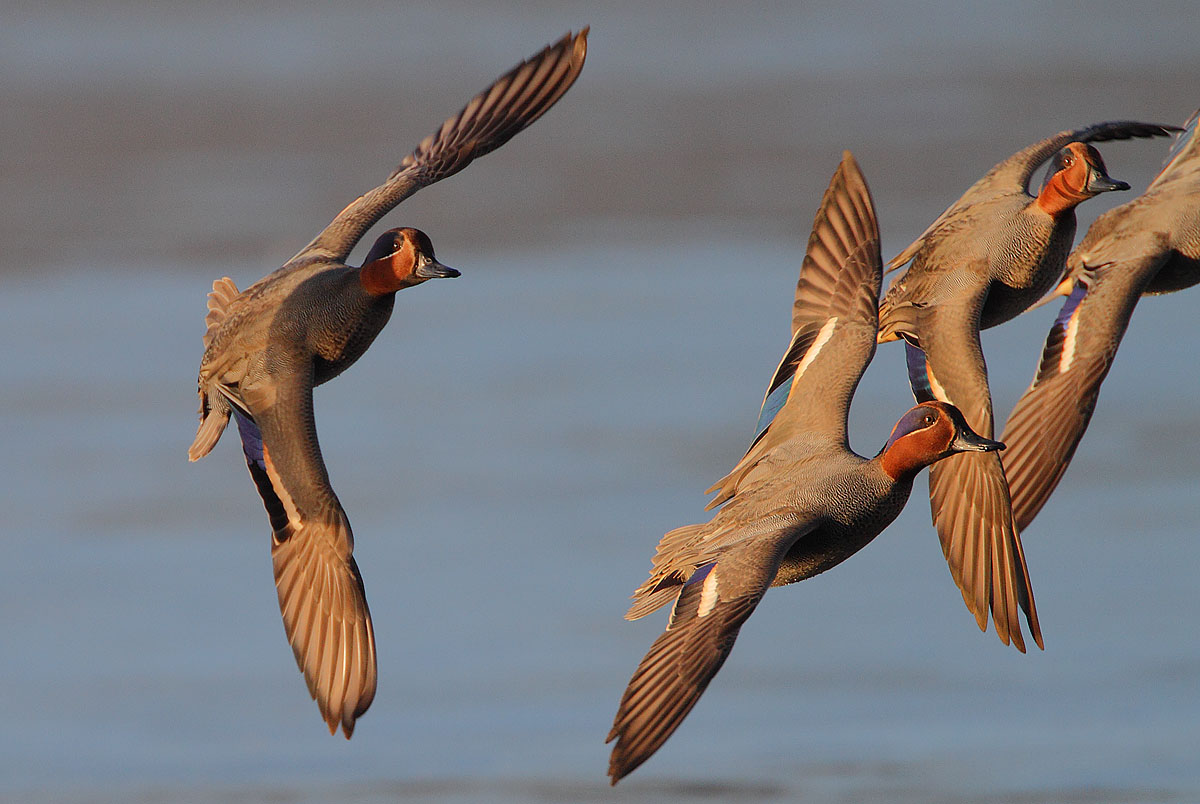
Ducks matter, even many miles away


Two new publications are now out.

They are part of the PhD thesis of Duarte Viana, based at Doñana Biological Station and focused on the long-distance dispersal of aquatic organisms by waterfowl - in which we are lucky to collaborate.

This one is already published and was selected for F1000Prime:


Viana, D.S., Santamaria, L., Michot, T.C., Figuerola, J. (2013) Migratory strategies of waterbirds shape thecontinental-scale dispersal of aquatic organisms. Ecography 36: 430-438.

And this one is available on early view:

Viana, D.S., Santamaria, L., Michot, T.C., Figuerola, J. (2013) Allometric scaling of long-distance seed dispersal by migratory birds. The American Naturalist 181: 649-662.


Congratulations to Duarte for two really cool pieces of work.

Image by Steve Garvie from Dunfermline, Fife, Scotland (EurasianTeal in flight) [CC-BY-SA-2.0 (http://creativecommons.org/licenses/by-sa/2.0)], via Wikimedia Commons.


1.5.13

Field campaign in Morocco

Last April 21-26th, we completed the second sampling campaign of project Quemomar, born from the interdisciplinary cooperation of three different departments of IMEDEA (Global Change Research, Marine Resources & Ecology and Biodiversity & Conservation).

The project, funded by the Spanish Cooperation Agency, analyzes the influence of the Mouluya River on the bio-geo-chemistry of its coastal zone.

The sampling, by a team of two Moroccan and four Spanish researchers, involved outings into the sea in two small boats and an extensive sampling along the river course.

It was an amazing experience, both natural and socially...

12.4.13

Spring is here

And, amongst the computer, lab and field work, we found some time to enjoy the new orchids.

Here, we share some with you...

29.1.13

Watch your cat


Our research on invasion complexes has focused, in the past, on the impact of predators, such as feral cats, and their prey, such as rats and rabbits, on islands. While feral cat removal is not necessarily positive, since it may result in counterintuitive effects (such as mesopredator release), their potential impact on native species requires attention and a more stringent regulatory framework.

Indeed, a recent study of the Smithsonian Conservation Biology Institute and the Fish and Wildlife Service estimated that domestic cats in the United States kill a median of 2.4 billion birds and 12.3 billion mammals a year, most of them native mammals. We hope that this study will help convincing our authorities to pay more attention to the issue.


17.12.12

Reunion Supper


Last Sunday, we received the visit of Ainhoa Magrach - a former PhD from the Lab who is now working at Laurance's Lab in Cairns, Australia. This, together with the return of Lucía and Martin (who had been away for a few months), was the perfect excuse to have a long lunch. A good occasion to remember that having good fun together is a key element for doing good work together.